
The True Cost of A Period: What We Use, What We Waste and What We Can Change
At Lena, we believe that disposable period products have huge consequences for your health, finances and the planet. In celebration of Earth Day this April, we’re calculating the true cost of your period, and how you can reduce it.

For something so commonly used, period products are surprisingly absent from conversations about sustainability.
In 2022, in the EU alone, it’s estimated that 49 billion single-use period products were used by menstruators, all of these designed to be used once and then thrown away. That’s 49 billion products that went to landfill.
We all want to do our part in fighting climate change, which leads us to rethink everyday habits: what we eat, what we wear, how we travel. Feminine care has also crept into this shift, chiefly because of valid concerns around plastic and toxic chemicals used in these products.
The reality is that our period products carry an environmental footprint that is easy to overlook and increasingly hard to ignore.
The lifecycle of period products
The lifecycle of a single tampon or pad begins long before it reaches your bathroom shelf. Cotton farming requires significant water and often involves pesticide use. Manufacturing involves energy, processing and packaging, with each pad and tampon typically individually wrapped in plastic. Transportation adds another layer of emissions as products move across countries and continents.
The pads and tampons you used as a teenager are still in landfill right now, and will stay there for the next 500-800 years. They’ll outlive you, your grandchildren and their grandchildren too. In the United States, more than 80% of period products end up in landfill sites, and of those that contain plastic (which most do), they break down extremely slowly, fragmenting into microplastics that persist in the environment. These tiny particles can make their way into soil and waterways, contributing to a wider cycle of pollution that affects ecosystems far beyond what we can see.
All of this for something that is used for just a few hours, and then thrown away.
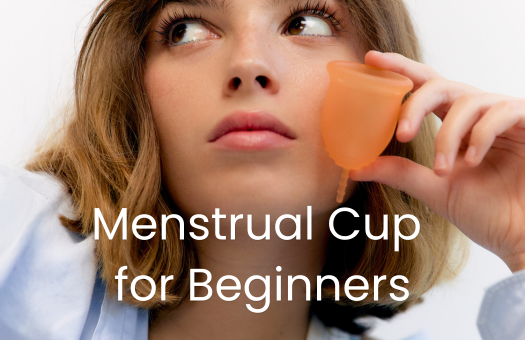
A reusable menstrual cup offers a sustainable alternative: at Lena our menstrual cups are made from 100% medical grade silicone, which will break down naturally without leaving harmful microplastics or chemicals to leak into the environment.
The Lena Cup: no plastic, no pesticides, no problem.

What Is Actually Inside Tampons? Are Tampons Toxic?
Today, your average tampon is largely a mixture of cotton and plastic, with a 2022 study reporting that most commercial tampons are now made of over 90% plastic.
From polyester to polyethylene (found in plastic bags), as well as “superabsorbent polyacrylates, perfumes, chemically processed cellulose such as viscose or rayon and cotton”. In some studies, traces of herbicides and pesticides can be found in both pads and tampons too, often because these are sprayed on the cotton. Herbicides such as glyphosate have been found in tampons at levels 40x higher than the safe legal limit in drinking water, as reported by The Guardian.
More people are beginning to question what they’re using on and inside their bodies, especially when that exposure is repeated over decades. The vaginal wall is highly absorbent, and while research is still evolving, it makes sense that many are choosing to take a more precautionary approach when it comes to their period products.
Are Tampons and Pads Bad for Vaginal Health?
Plastic is not just a problem for the planet’s health, it’s a problem for your health too.
The vagina is a delicate yet efficient self-regulating environment, home to a carefully balanced microbiome that helps protect against infection and irritation. Introducing synthetic materials, fragrances, or highly absorbent products can disrupt that balance, particularly for those who are more sensitive.
Some people notice dryness, irritation, or discomfort when using certain products, while others may not experience any issues at all. We know that all bodies and menstrual cycles are different, and there’s no one-size-fits-all answer.
Ultimately, supporting vaginal health often comes down to choosing products that feel comfortable, breathable and aligned with your body’s needs.

How Much Do Period Products Cost Per Year?
Over a lifetime, the cost of disposable products like tampons and pads can quietly add up to thousands. From monthly restocks to pain relief, replacement underwear, and other essentials, managing a period is an ongoing expense that many menstruators simply absorb without question.
The rising cost of our period highlights how something entirely natural can become a long-term financial burden, making reusable options not only a more sustainable choice for the planet, but for your bank account too.
Menstrual Cup vs Tampon: Are Menstrual Cups Safe?
In contrast to single-use products, menstrual cups offer a completely different approach.
Made entirely from medical-grade silicone, a Lena Cup can be used for up to 10 years. Instead of absorbing menstrual blood, it collects it, which both reduces dryness and typically allows for longer wear time throughout the day.
Over the course of its lifespan, one cup can replace thousands of tampons or pads. That’s not only a significant reduction in waste, but also a shift away from the constant cycle of buying, using and disposing.
For many, the switch also brings a sense of simplicity. There’s no need to restock every month, no overflowing bins, and when you can leave your reusable cup in for 12 hours at a time, you can get on with your day with minimal disruptions. No more waking in the middle of the night to change an irritating tampon.
It’s no wonder then, that across 13 different studies of menstrual cup use, over 73% of participants stated they would continue to use the cup as their choice of period product.
Beyond sustainability, it becomes about feeling more connected to your body and your cycle in a way that feels intuitive rather than inconvenient.

Why Switching to Sustainable Period Products Makes a Difference
Sustainability can feel all-consuming, especially when framed as an all-or-nothing decision. We want to encourage our audience that when it comes to period care, even small shifts can have a meaningful impact.
Switching to a reusable menstrual cup can significantly reduce the number of disposable products you use each year. In doing so, you reduce plastic waste, water consumption and exposure to harmful chemicals for you and the environment. It’s a win-win.
Even simply becoming more aware of what you’re using is a powerful starting point, because change doesn’t have to be perfect to matter.
Written and edited by Dr Rachel Denham.
Dr Rachel Denham is a trained medic and Women's Health Practitioner, who has worked across the charity and humanitarian sector and now specialises in women's health. Rachel is the creator of Bloody Nora, a women's health and wellbeing zine that fuses storytelling, art and science.
Sources:
https://english.elpais.com/society/2023-04-02/the-lifecycle-of-a-tampon-and-the-uncertainties-surrounding-it-used-for-only-a-few-hours-it-takes-hundreds-of-years-to-disintegrate.html
https://pmc.ncbi.nlm.nih.gov/articles/PMC11865846/
https://www.theguardian.com/environment/2025/may/28/toxic-pesticide-levels-found-in-tampons-40-times-higher-than-legal-limit-for-water
https://www.sciencedirect.com/science/article/pii/S2468266719301112